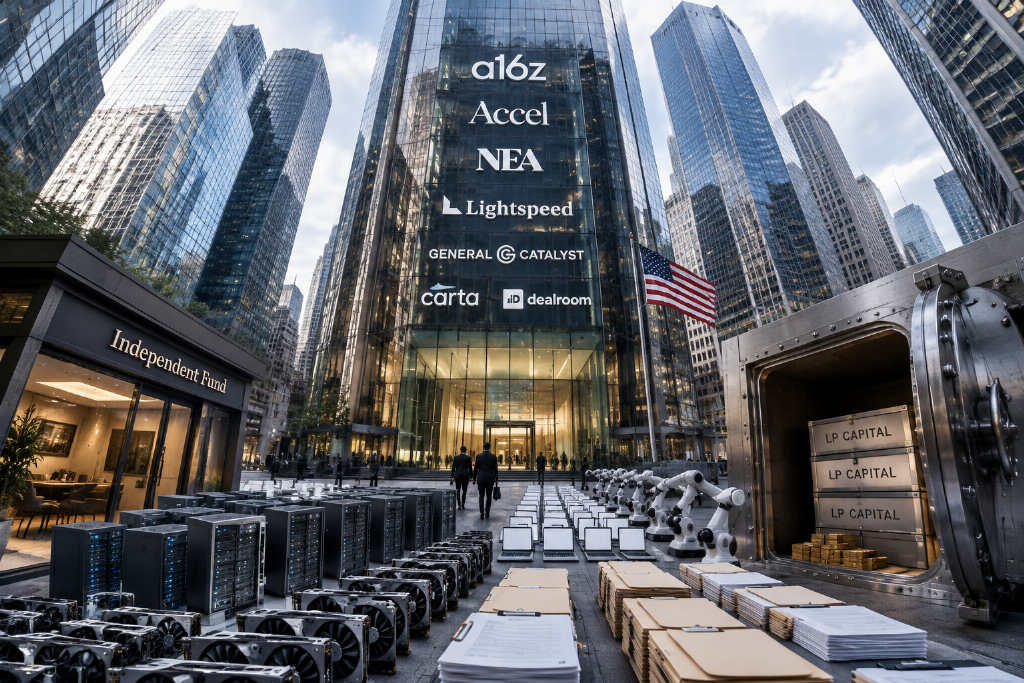
venture capit2026-10-10 04:51:16VCs crowd into similar AI bets while many older funds still haven’t returned capitalFresh datasets from Odin, Carta, Theory Ventures, Ramp and PostQuantum point to the same broad conclusion: capital is getting more concentrated, while the pressures behind that capital are becoming harder to ignore. Odin’s analysis of seed portfolios from 2023 to 2025 found that emerging managers allocated 24.7% of scoreable seed investments to “outlier” companies, versus 11.5% for five mega-funds including Andreessen Horowitz, General Catalyst, Lightspeed, NEA and Accel. The gap did not come from every smaller fund being contrarian. It came from a subset of specialist managers with mandates that looked different from the AI-heavy consensus. Carta’s Q2 2026 VC fund performance data adds another layer. Among U.S. venture funds that began investing in 2017, the median net DPI was just 0.37x after roughly nine years, close to the end of a standard 10-year fund life. Even upper-quartile funds were at 0.70x, while only the top 10% had returned more than paid-in capital, at 1.37x. The article argues that founders should care because a fund’s age and cash-return profile can shape how it behaves in follow-on rounds, secondary sales and exit discussions. The same piece also argues that the biggest AI market is not the frontier model tier, and that AI spending should be benchmarked against labor, software seats or COGS depending on what the spend is actually replacing.110